

Aircraft overview
The Airbus A320 is a twin-engined, single-aisle passenger airliner for short- and medium-range services. It is the original member of a family that also includes the shorter A319 and longer A321. Digital flight controls and sidestick controllers are central features of its cockpit.
The first A320 flew on 22 February 1987, and airline service began in 1988. The A320-200 uses the original engine options; later neo aircraft retain the family identity but use different engines and include other changes.
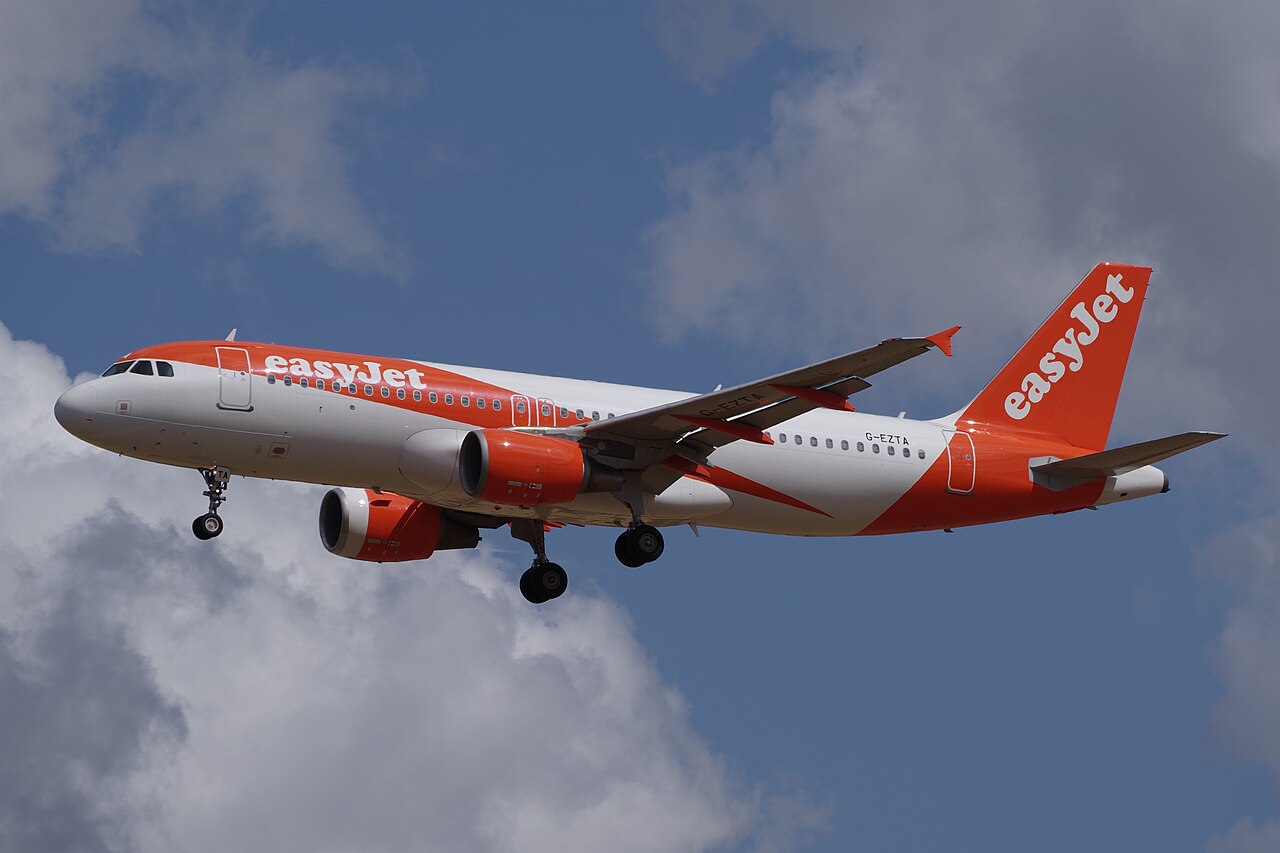
Photograph: André Gerwing · 4 July 2025 · Photo source · CC BY-SA 4.0

At a glance
A320-200 · original engines and wing-tip fences; example configurations documented in July 2026, rather than a specific aircraft’s 1998 fit
- Length
- 37.57 mA320-200.
- Wingspan
- 34.10 mWing-tip fences; the later Sharklet span is different.
- Outside fuselage width
- 3.95 mExternal body width, not internal cabin width.
- Engines
- Two CFM56 or IAE V2500 turbofansOriginal-engine installations; an aircraft has one selected engine type.
- Example passenger layouts
- 150 / 180 seatsTwo-class / high-density single-class examples; not universal limits or actual occupancy.
- Example maximum take-off mass
- 73,500 kgWV000 weight option.
- Example maximum landing mass
- 64,500 kgSame WV000 option.
In Air Defender
Role guidance · v0.8.16.0
Air Defender v0.8.16.0 includes the A320 as a commercial airliner. Its catalogue values appear in their own game-data section, separate from the aircraft specifications above.
Use Aircraft Data, flight-plan information and the identification guide together. A passenger-aircraft type does not establish the identity or intentions of a particular contact.
Game catalogue values · v0.8.16.0
In-game specifications
These figures come from the game’s general aircraft reference. A matching civilian register entry can supply different fields in Aircraft Data. How to read the two layouts →
- Role
- Commercial Airliner
- Category
- Commercial Airliner
- Service ceiling
- 39,800 ftA reference upper height. Read Flight Info for the contact’s present height.
- Maximum speed
- 537 knotsA reference maximum, not the speed the aircraft is flying now.
- Cruise speed
- 447 knotsA typical speed for the main part of a flight, not a guaranteed commanded speed.
- Stall speed
- 125 knotsA reference for specified conditions. Stalling means the wing loses lift, not that an engine stops.
- Typical crew
- 2
- Powerplant
- Twin turbofan engines (CFM56 or IAE V2500) Compare engine types →
- Manufacturer
- Airbus (Europe)
Use the right procedure
Civilian Aircraft Data
For a contact identified as Airbus A320 (A320), Aircraft Data can show this civilian entry instead of the general table above. Read the type code in the panel first: a different version of the aircraft can have different figures.
| Console field | Game reference value |
|---|---|
| ICAO type code | A320 |
| Role | AIRLINER |
| Weight class | Medium |
| Cruise speed | 452 knots |
| Maximum speed | 473 knots |
| Ceiling | 39,800 ft |
| Climb rate | 2,500 ft/min |
| Range | 2,940 NM |
| PAX | 150 |
PAX means the typical number of passengers in this reference. CARGO means the entry is shown as a freight aircraft; it is not a count of people aboard. Climb rate is the height gained each minute. Weight class groups aircraft by weight; it does not show today’s load.
These are reference figures, not the contact’s present speed, height, fuel or passenger count. How to open and read Aircraft Data → What the figures mean →
In depth
Development and family design
The A320-200 has a 37.57 m fuselage and a 3.95 m outside body width. Its position between the smaller A319 and larger A321 gives the family a choice of passenger capacities while retaining a common cockpit approach.
Sidesticks and fly-by-wire
Sidesticks provide the pilots’ control inputs. Computers process those inputs, or commands from the autopilot, and send electrical signals to the actuators that move the flight-control surfaces. This is the principle of fly-by-wire.
Common cockpit design reduces the additional training needed when moving between family members. It does not make their weights, cabin capacities or performance identical.
Original-engine installations
CFM56 and IAE V2500 engines are alternative original-generation installations. Both are turbofans, mounted beneath the wings. The later label ceo means Current Engine Option and distinguishes this generation from neo, New Engine Option.
Cabin and airline configuration
The 150-seat example divides the cabin into 12 first-class and 138 economy seats. A high-density alternative has 180 economy seats in six-abreast rows. Both examples include three lavatories and two galleys, but their seating and cabin-crew station arrangements differ.
Weight limits and operating load
Take-off and landing limits apply to the whole aircraft, including its fuel and load. They are different structural limits, not interchangeable performance figures. WV000 identifies one weight option; it is not a single universal limit for the type.
These July 2026 examples describe the original-engine A320-200. The figures do not specify the cabin, weight option or equipment fitted to an individual aircraft in 1998.
Variants
A320-200
Original-engine model with CFM56 or V2500 engines and wing-tip fences.
A320neo
The later New Engine Option generation. Its first delivery was in January 2016, after the game’s 1998 setting.
After 1998
Family developments · 2010–2016
The neo programme was announced in December 2010. The first A320neo was delivered to Lufthansa in January 2016. These family milestones belong after the game’s 1998 setting; they are not service-entry dates for every neo model.