

On this page
Unfamiliar word? Select a dotted-underlined term for its meaning.
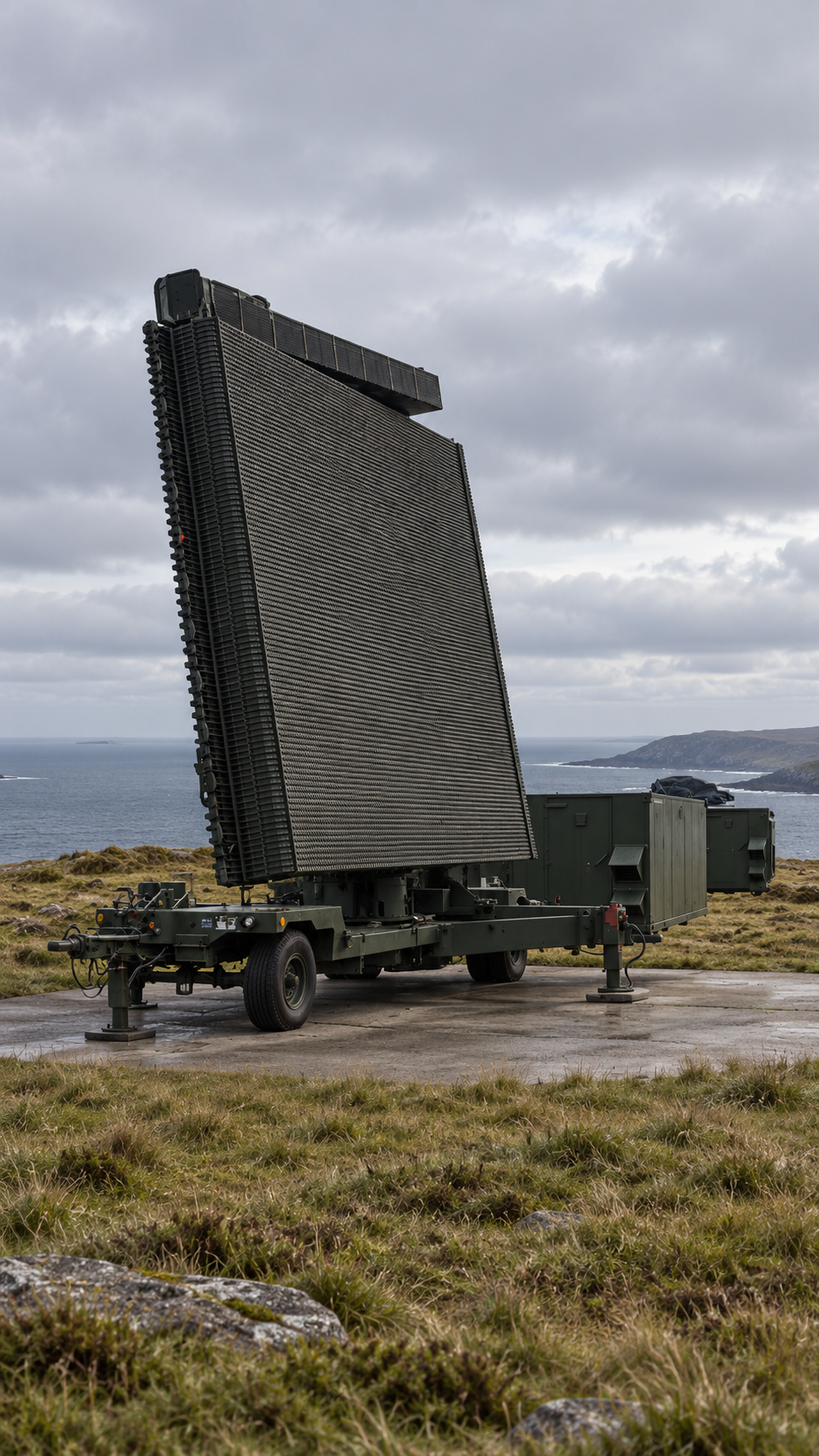
Primary radar
A transmitter sends energy towards an aircraft. A receiver detects some of the reflected energy. The signal’s round-trip travel time gives slant range: the direct distance from radar to aircraft, rather than distance along the ground. Antenna direction gives bearing. Primary detection does not require a cooperative transponder. Some radar systems also measure elevation to derive height.
Secondary radar
Secondary radar sends a question to the aircraft’s transponder and receives a coded reply. It determines range and azimuth, while reply data can include a squawk and pressure altitude, depending on the mode. This is called cooperative surveillance because it depends on equipment aboard the aircraft replying.
Why both matter
No transponder reply does not mean no aircraft. Conversely, an ordinary civil transponder reply is information to assess, not military proof of friendly identity. The video connects that distinction to the game’s radar picture.
Sources & further reading
- FAA · Surveillance systems ↗
- EUROCONTROL · Primary surveillance radar ↗
- EUROCONTROL · Surveillance techniques, WAM report ↗
Further reading on the real-world concepts discussed here. These sources do not document Air Defender’s controls or behaviour.